

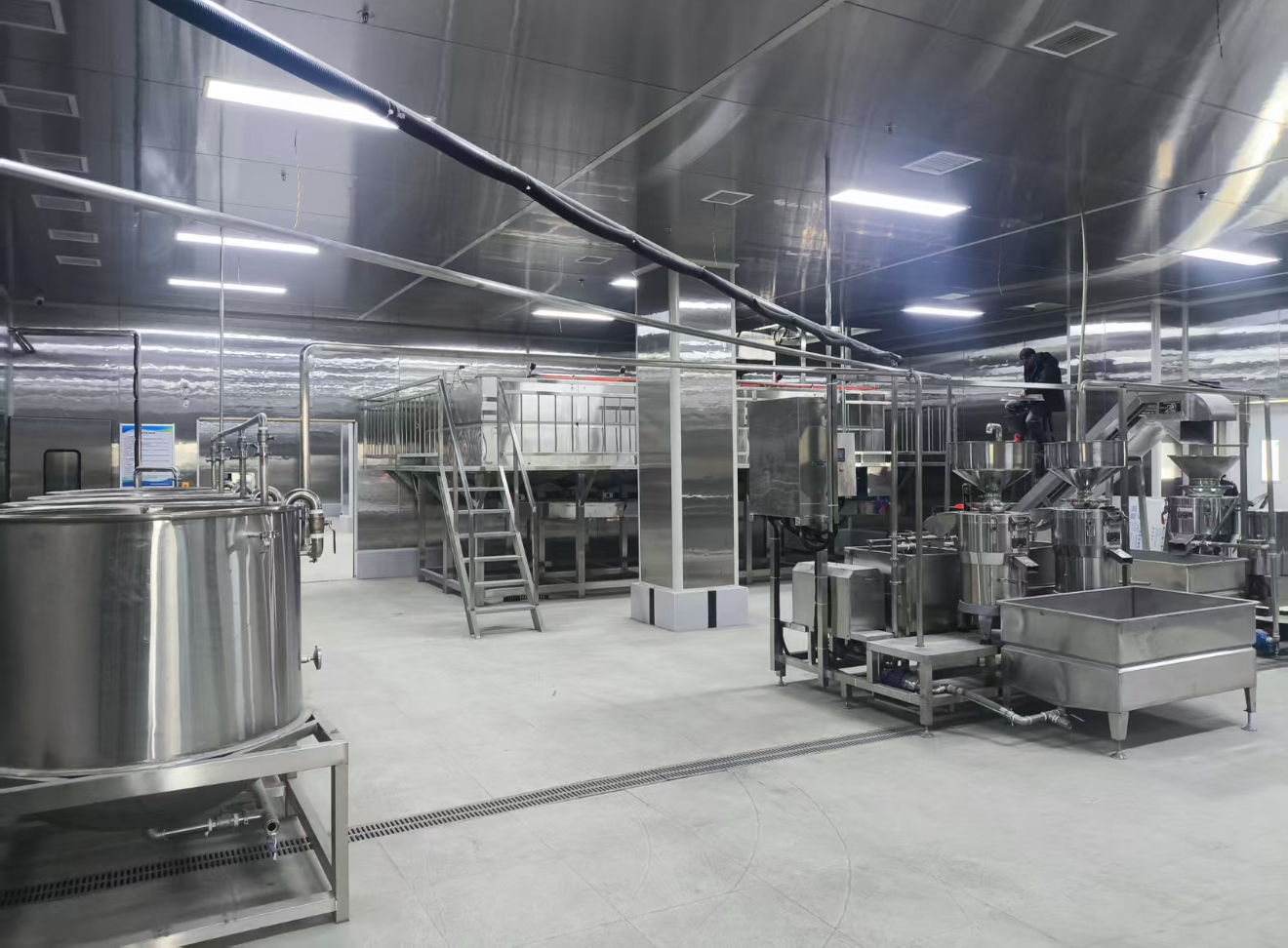
Introduction
Proper hygiene management of machinery and equipment is critical in soy food processing, including tofu, soy milk, yuba, and other soy-based products.
Regular cleaning and sanitation not only ensure food safety and product quality, but also help extend equipment service life and comply with international food safety systems such as HACCP and GMP.
1. Regular Cleaning and Disinfection
All equipment, utensils, and production pipelines used for processing, manufacturing, packaging, storage, and transportation must be cleaned and disinfected on a regular basis according to established sanitation schedules.
2. Sanitation of Food Contact Surfaces
All food contact surfaces—including equipment, tools, and pipelines that come into direct contact with raw materials or finished products—must:
- Be corrosion-resistant and free from rust
- Be disinfected frequently
- Be thoroughly rinsed after disinfection (except when heat sterilization is used)
This prevents chemical residue from disinfectants and eliminates potential contamination risks.
3. Post-Operation Cleaning
After each production cycle, all used equipment and utensils must be thoroughly cleaned and disinfected.
When necessary, an additional cleaning should be performed before the next production shift, except for equipment used exclusively with dry food materials.
4. Cleaning After Pest Control Treatments
If insecticides or pest control chemicals are used in the workshop, all equipment and utensils must be thoroughly cleaned to remove chemical residues and prevent product contamination before production resumes.
5. Storage of Cleaned Equipment and Utensils
Cleaned and disinfected movable equipment and utensils should be stored in designated areas that:
- Prevent re-contamination of food contact surfaces
- Keep equipment in hygienic and ready-to-use condition
6. Water Quality for Cleaning
Water used for cleaning equipment and utensils that come into contact with raw materials or finished products must meet national drinking water standards, ensuring safety and hygiene throughout the cleaning process.
7. Dedicated Use of Production Equipment and Facilities
Production machinery and workshop areas must not be used for non-production purposes.
Dedicated use helps maintain hygiene, prevents cross-contamination, and ensures compliance with food safety regulations.