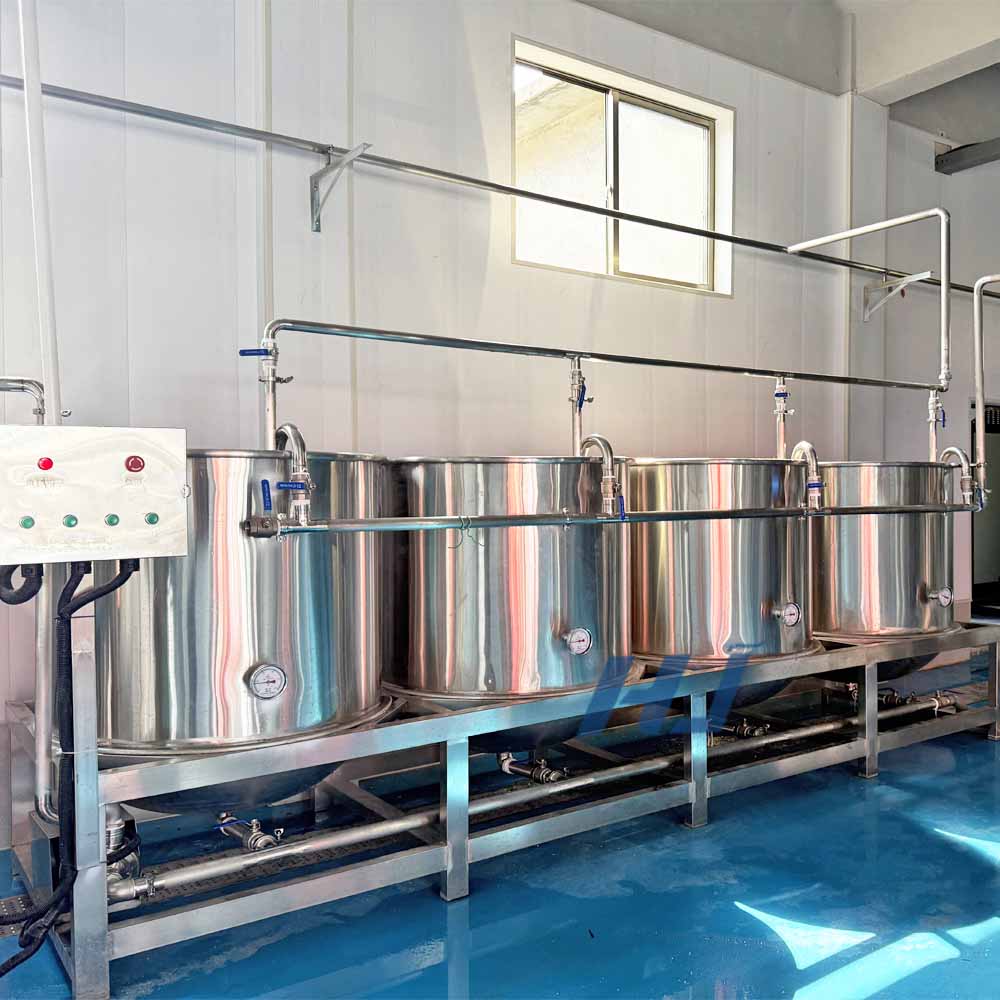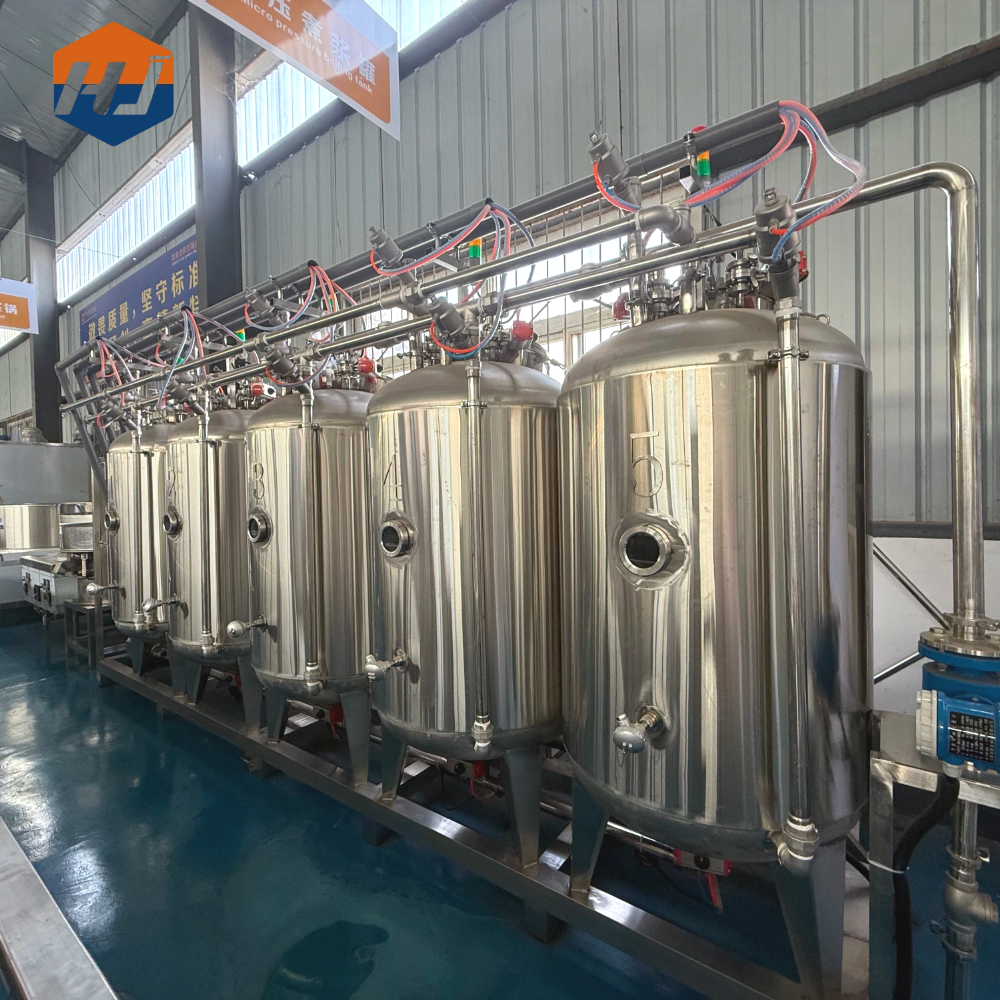

Traditional soy milk production processes generally include soybean selection, soaking, washing, grinding, pulp and residue separation, and boiling. Among these, how to use the soy milk cooking machine to boil the soy milk is an indispensable and important step in soy product production.
The main purpose of boiling soybean milk is to heat it, causing appropriate thermal denaturation of the proteins. This exposes hydrophobic groups such as sulfhydryl groups, disulfide bonds, and hydrophobic amino acid side chains within the protein molecules. Increased hydrophobicity on the soybean protein surface intensifies protein molecule aggregation, creating the necessary conditions for the next coagulation step. In addition, the boiling process also serves the following purposes:
1) Destroying undesirable bioactive factors in soybeans, improving the product’s palatability;
2) Reducing or eliminating the beany odor of soybeans, enhancing the product’s flavor;
3) Killing harmful bacteria in soybeans through high-temperature boiling, ensuring food safety.
Currently, the soy product industry primarily uses steam cooking methods for soy milk. One method is non-contact cooking, where steam is introduced into a jacket or tubular structure to heat the soy milk. The other is contact cooking, where steam is directly injected into the raw soy milk through small holes. However, due to the introduction of condensate from the steam, contact cooking can slightly reduce the concentration of the soy milk. While non-contact cooking avoids this concentration issue, it consumes more energy and is prone to scorching, making cleaning more difficult. Therefore, most companies currently use contact cooking. Contact cooking equipment mainly includes open-top soy milk cookers and micro-pressure soy milk cookers.