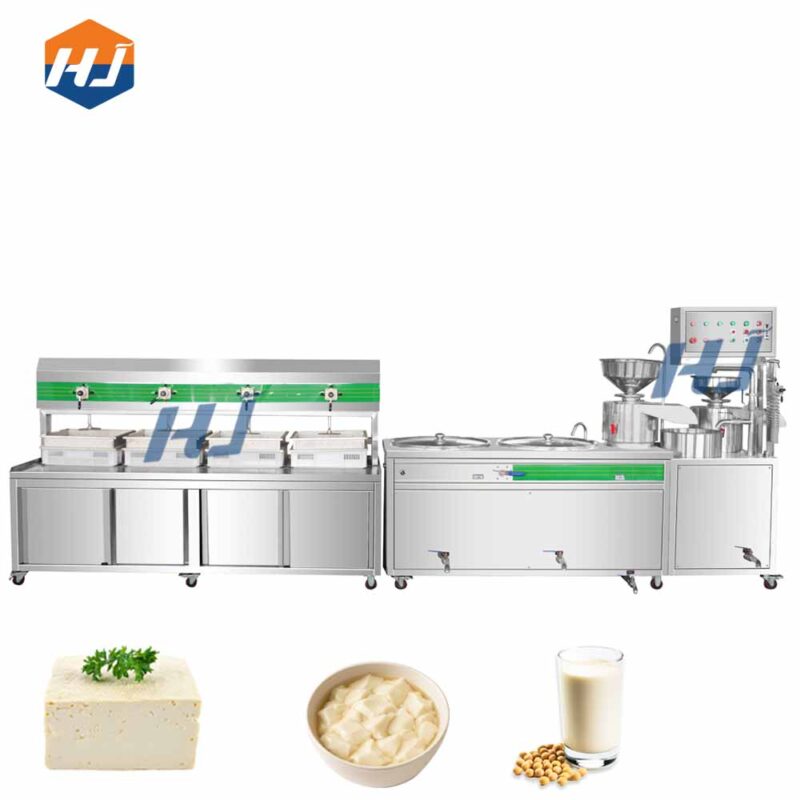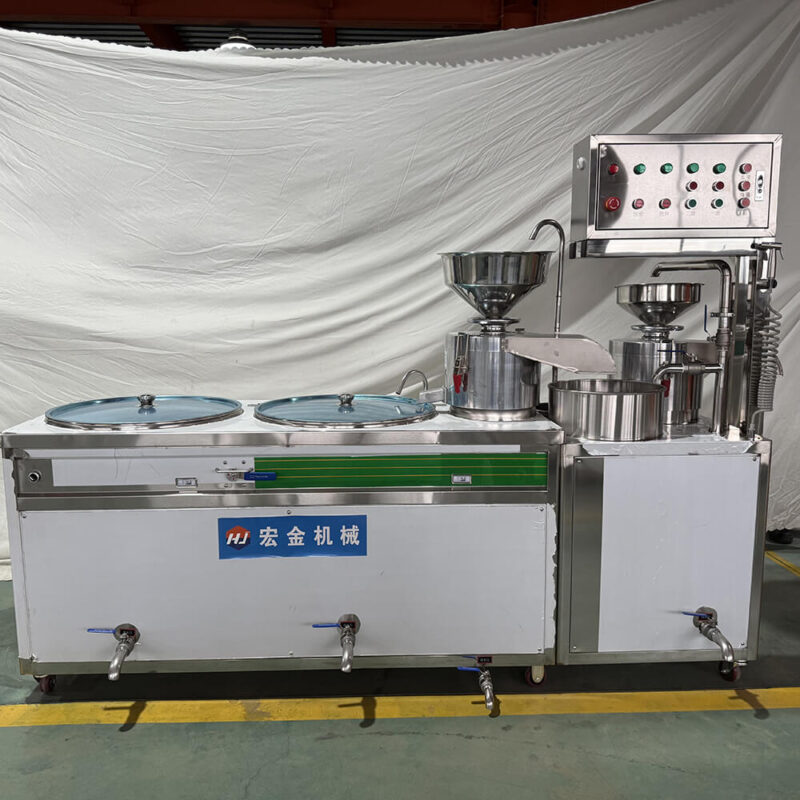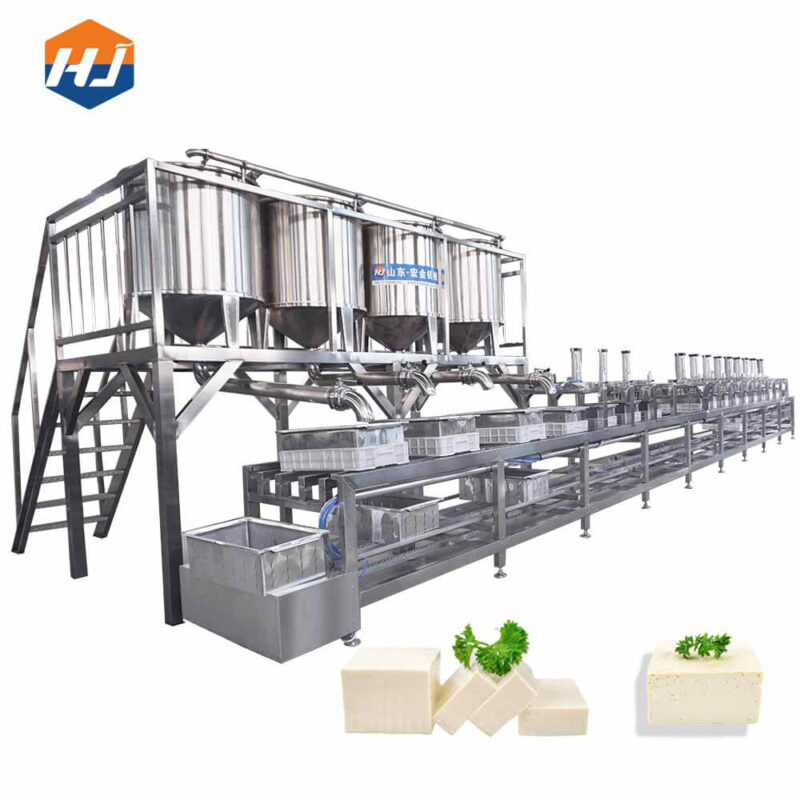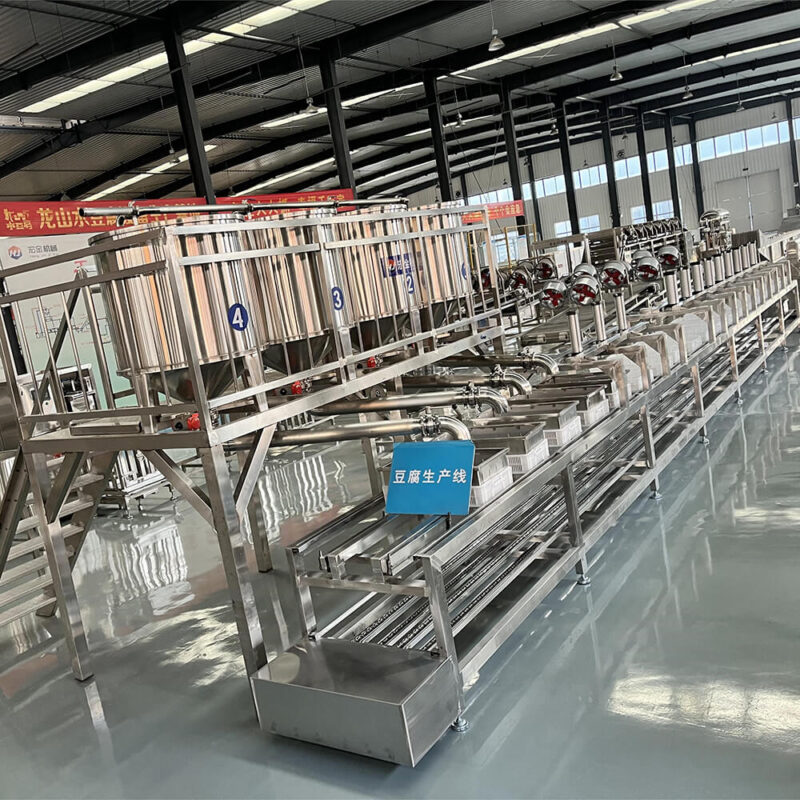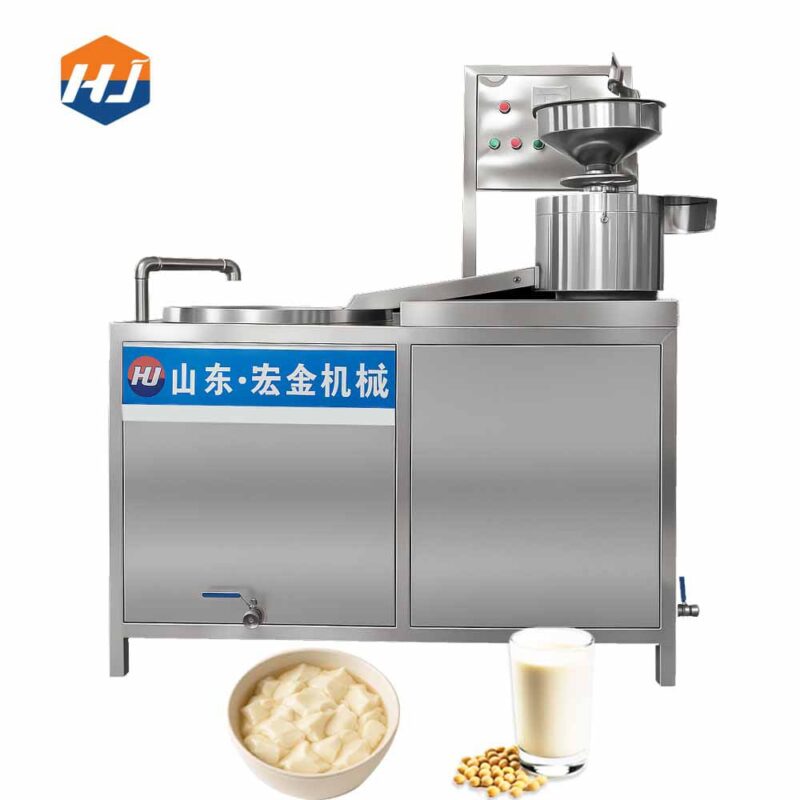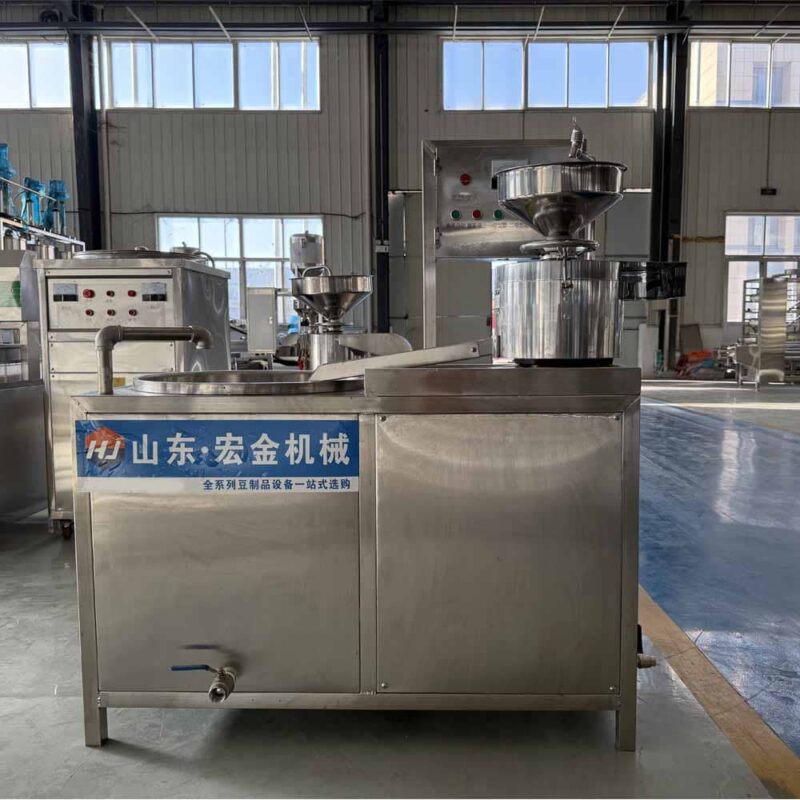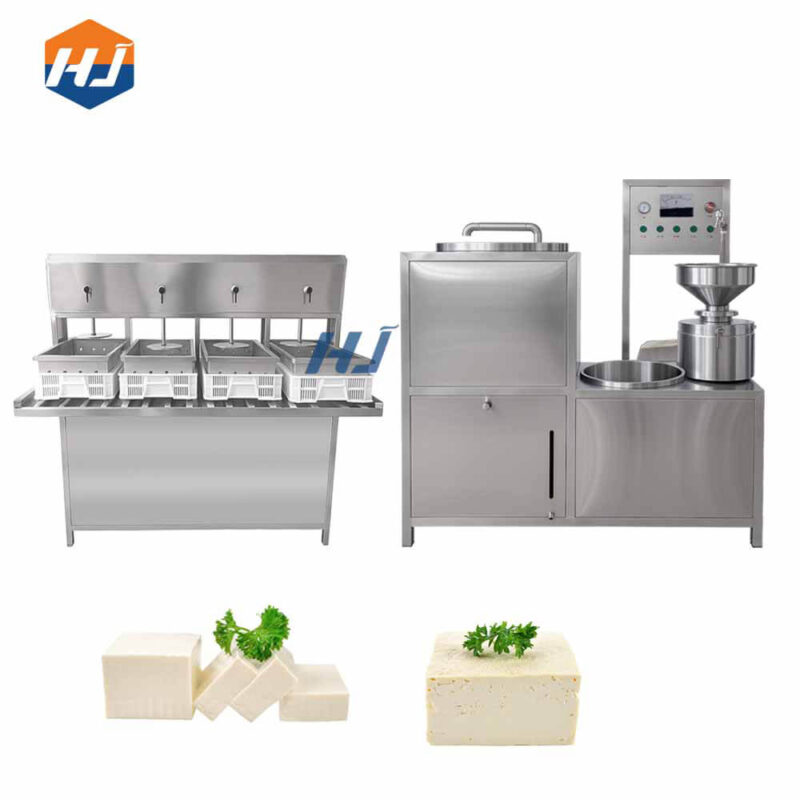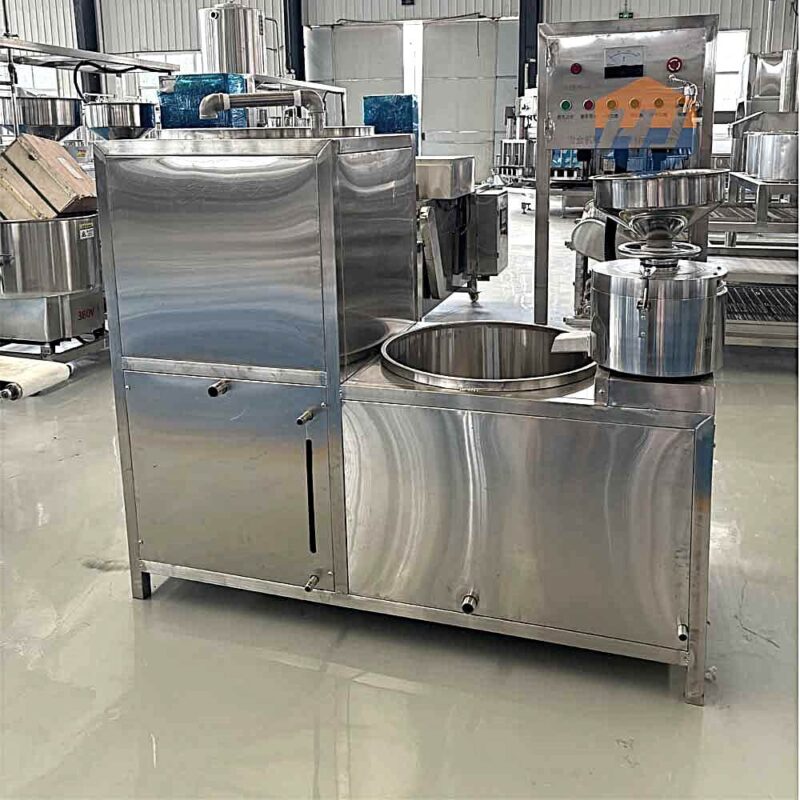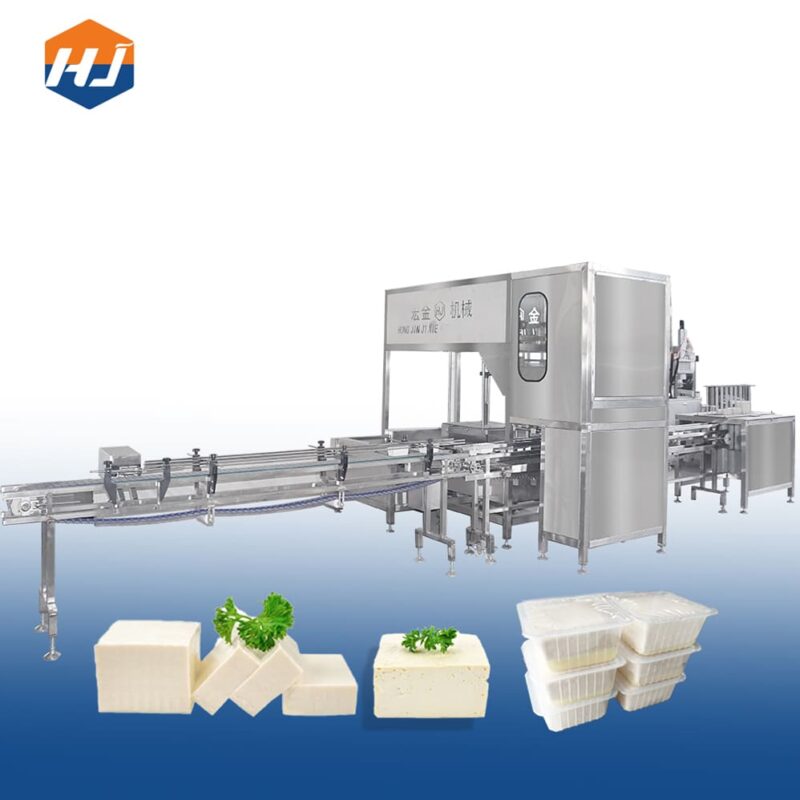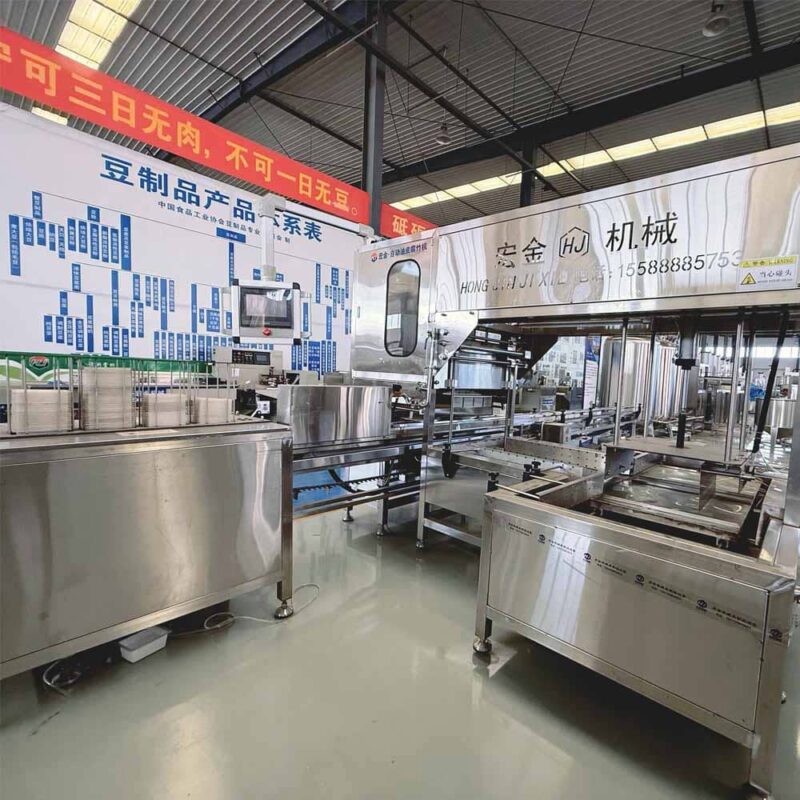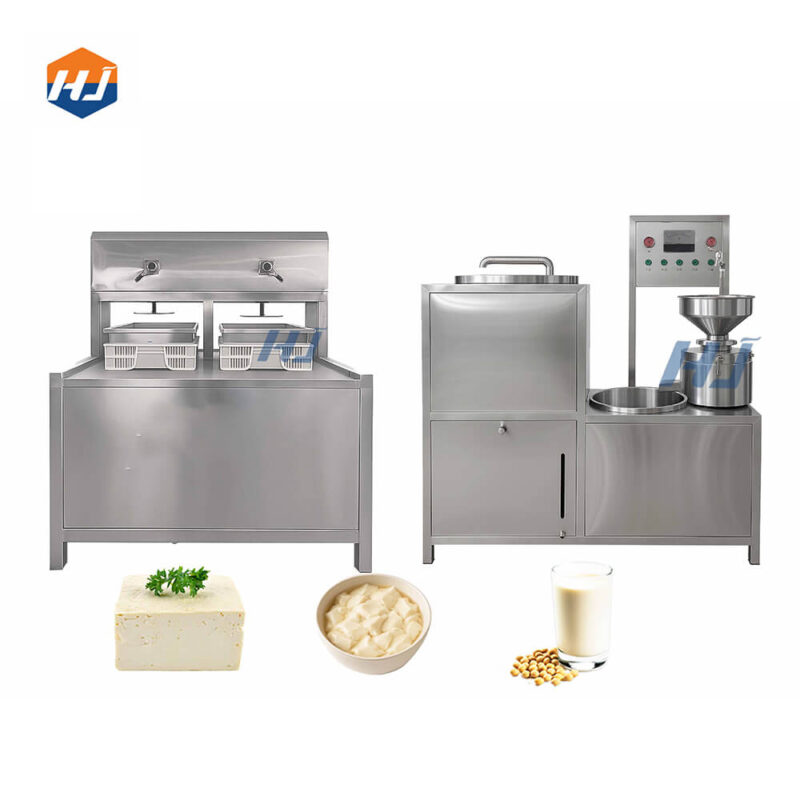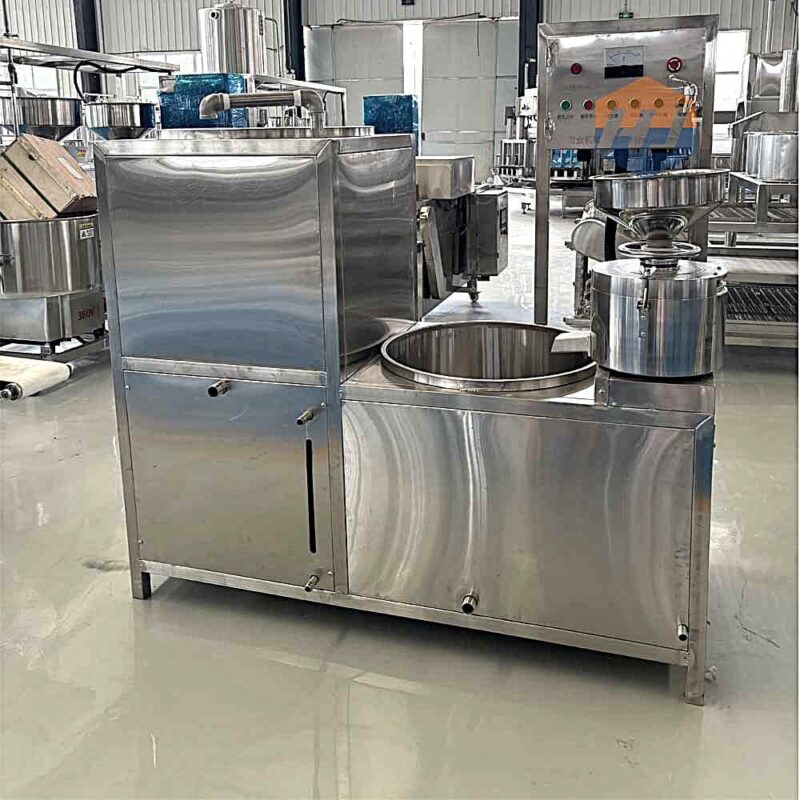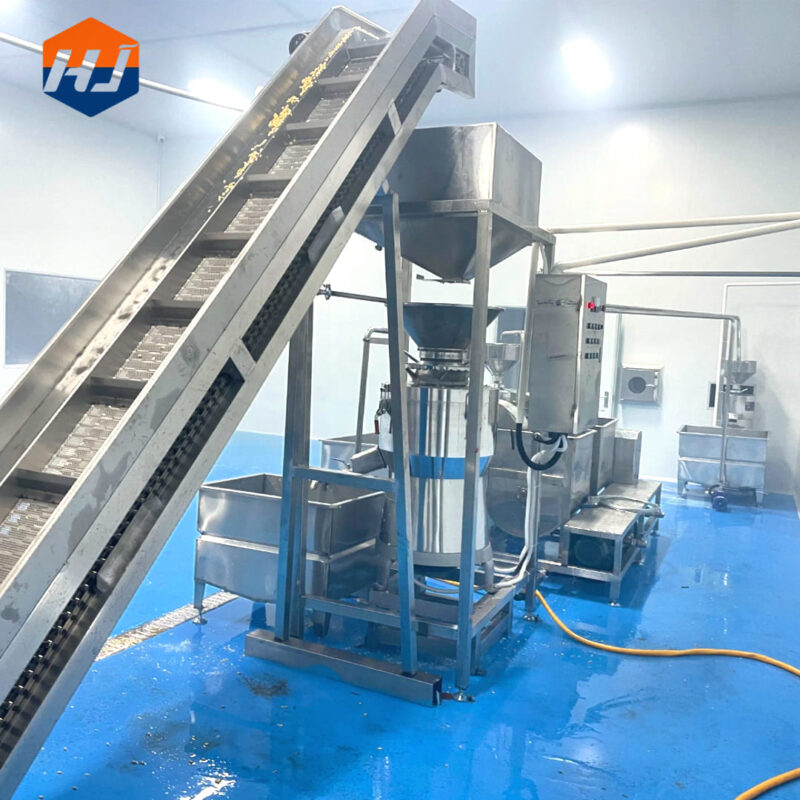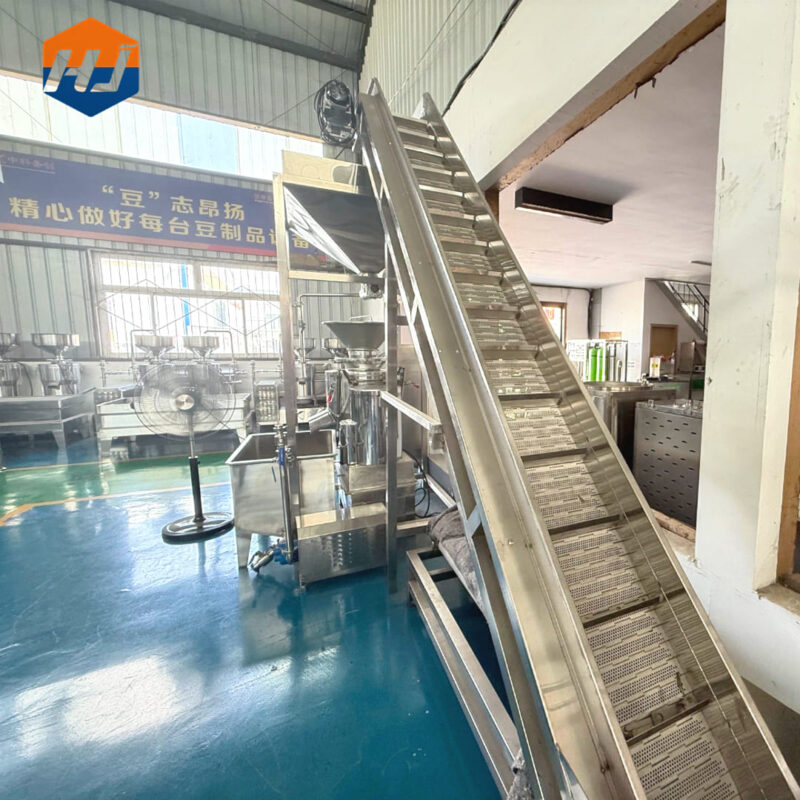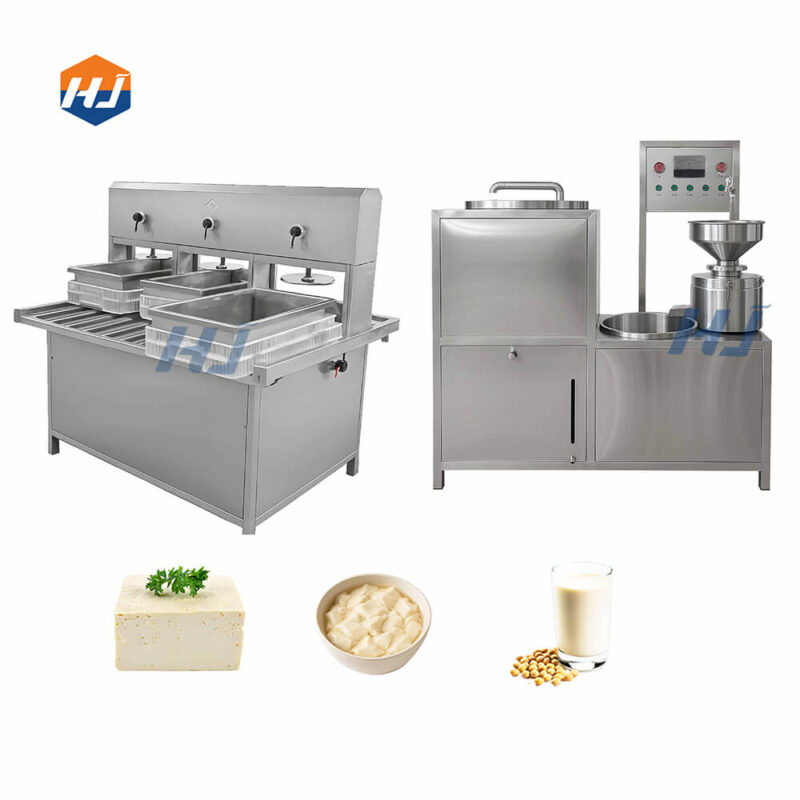

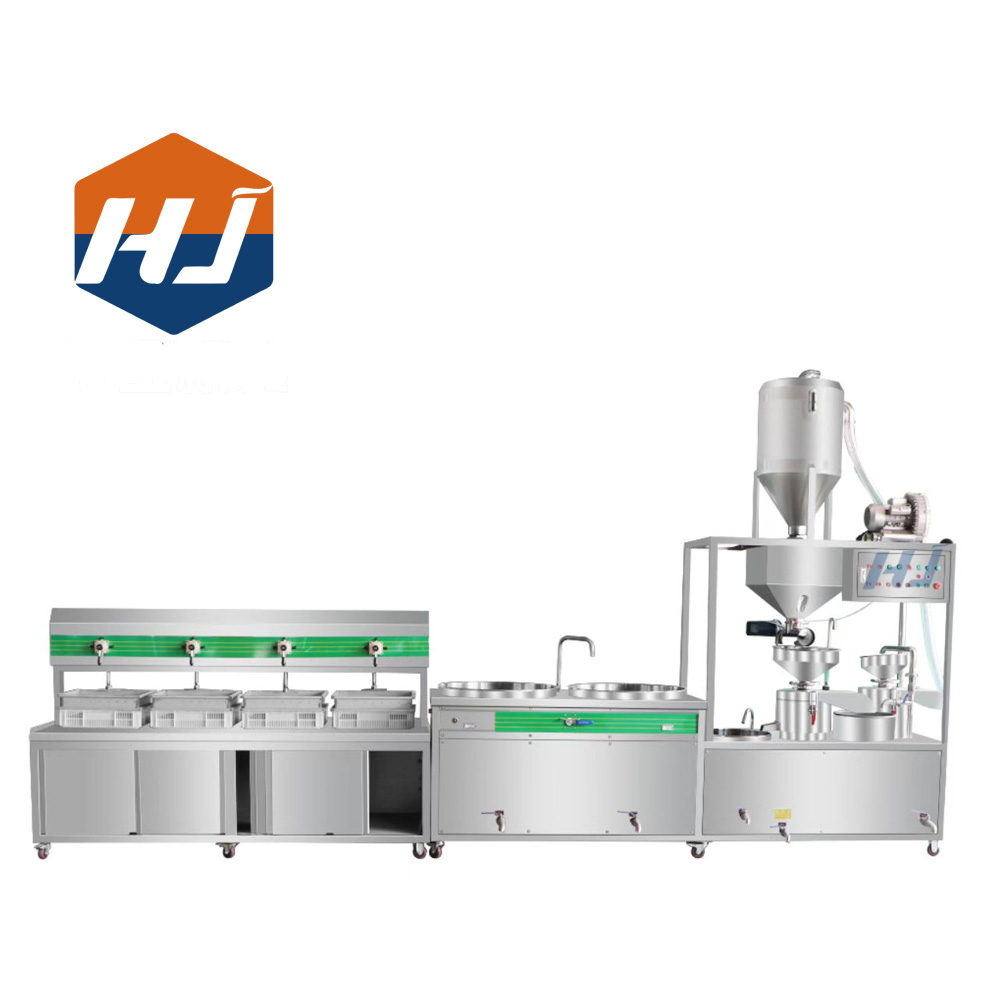
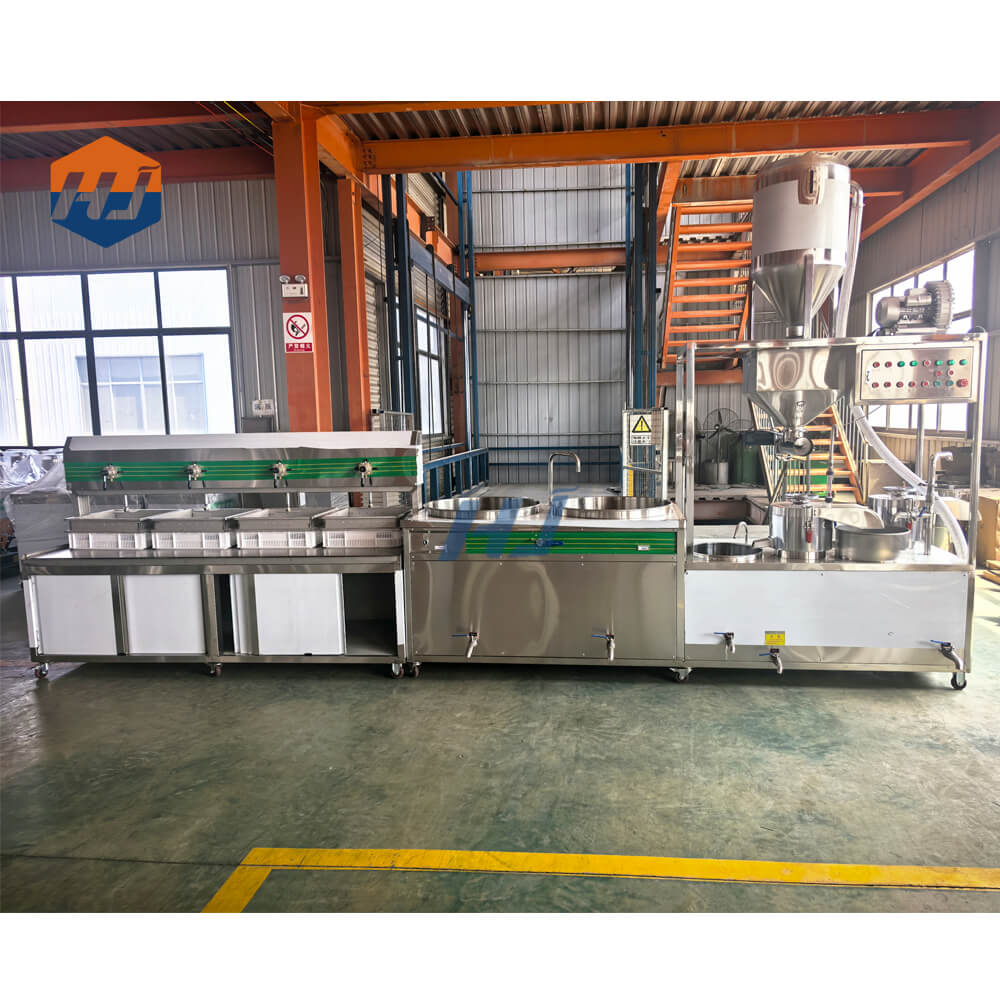
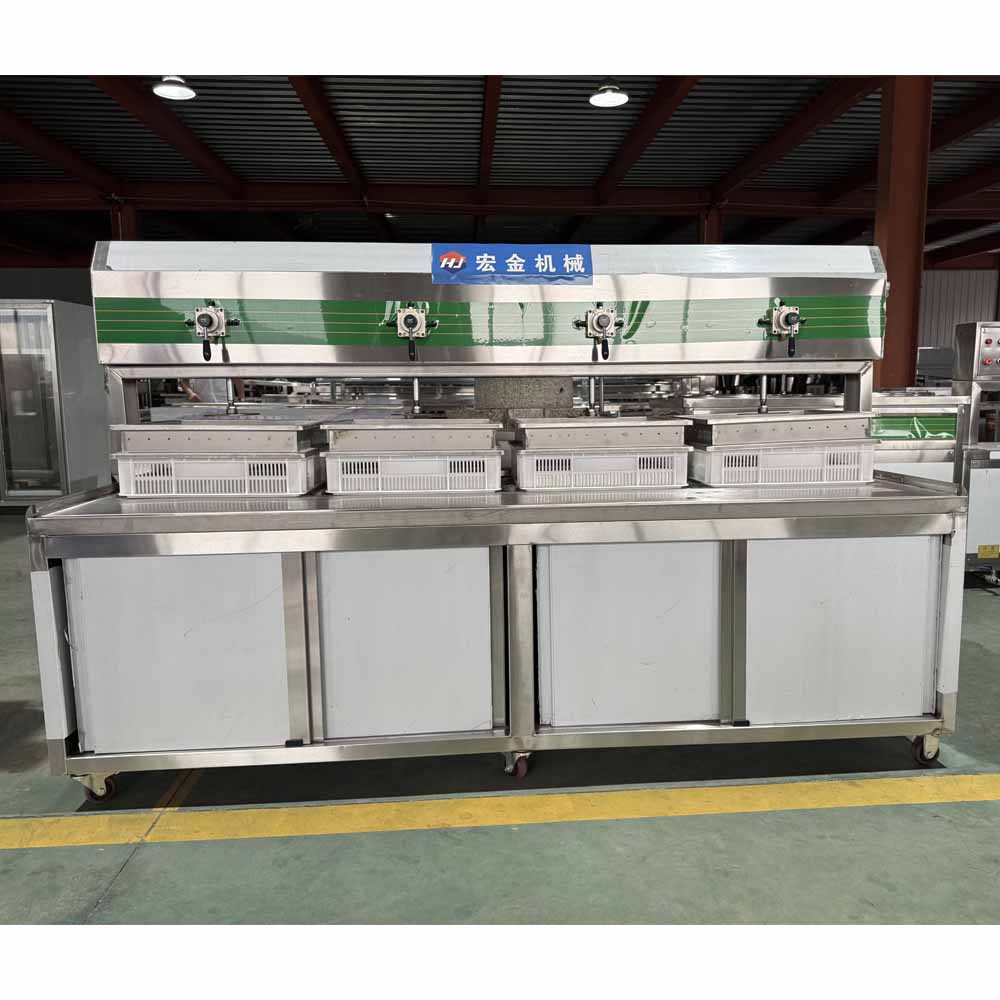
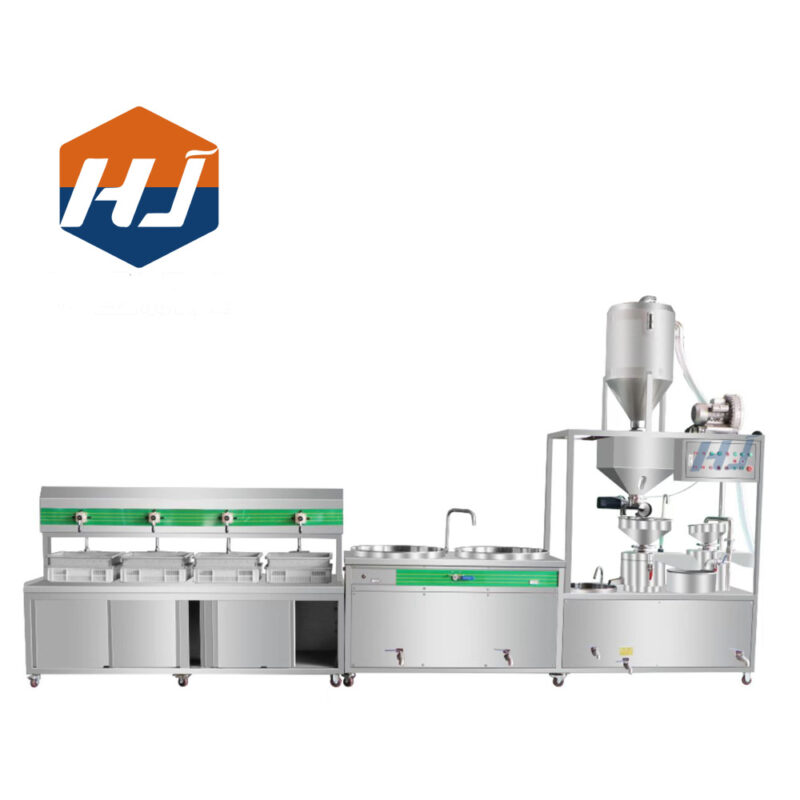
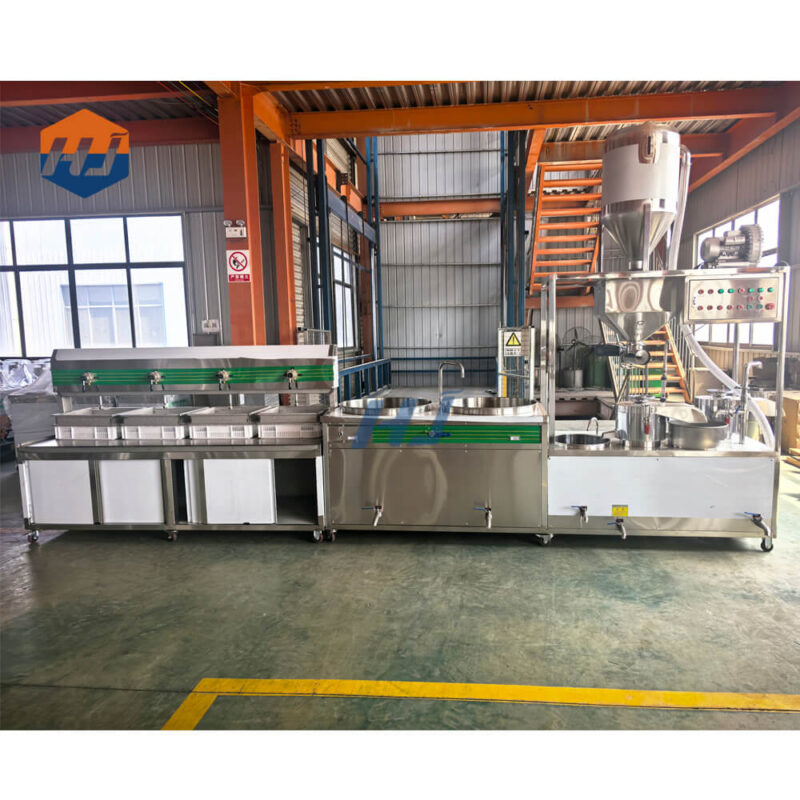
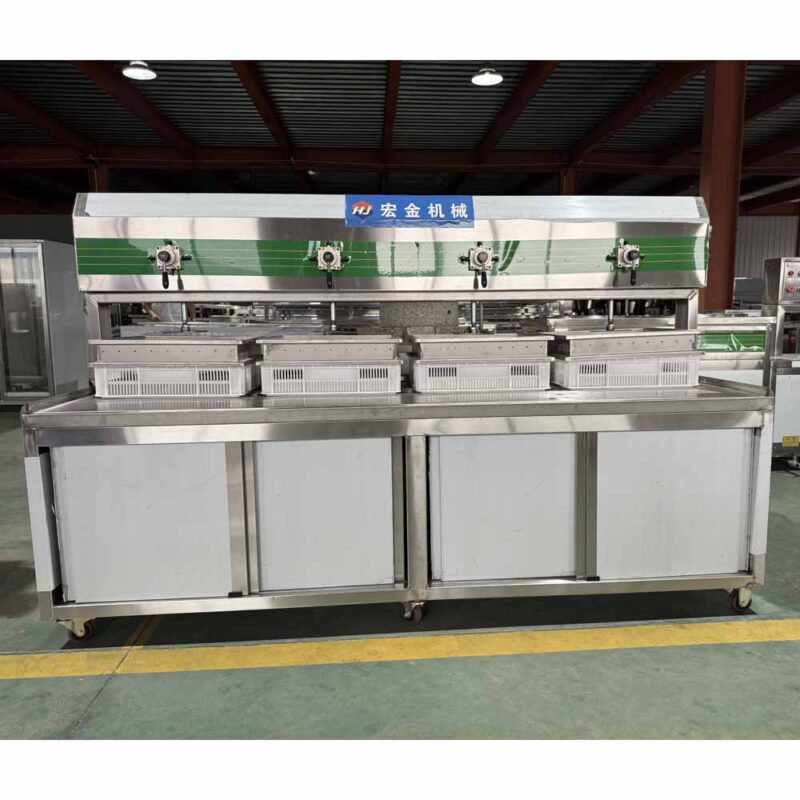
| 机器尺寸 | Grinding an cooking machine:300*80*290cm Tofu machine:220*77m*138cm |
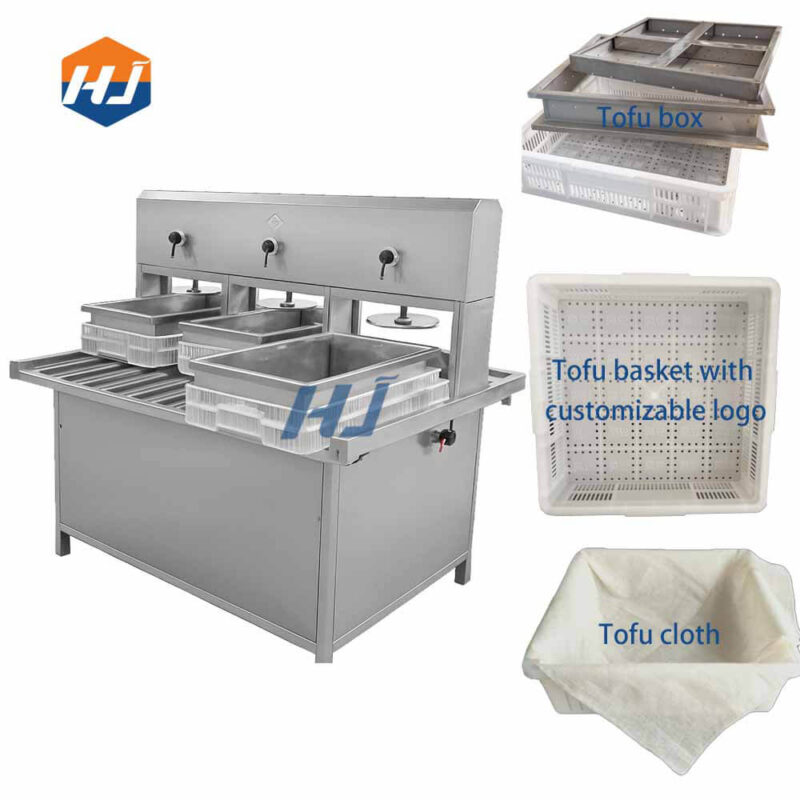
| 豆腐模具尺寸 | 48*48*11cm |
| 两个煮浆桶尺寸 | Option 1:Diameter 70 cm Depth 70 cm. Option 2:Diameter 80 cm Depth 80 cm. |
| 磨浆机型号 | #155*2 |
| Power | Grinding: 4.4 kW; Dregs Agitation & Pumping: 1 kW; Slurry Pumping: 1.4 kW Automatic Bean Suction: 2.2 kW cooking: 48 kW |
| 产品 | Soymilk, Tofu pudding, Tofu |
设备介绍
机器通过管道真空吸入黄豆,不需要人工倒入黄豆,机器定量把黄豆落入磨浆机进料口,第一个磨浆机分离豆浆和豆渣,然后把豆渣进行加水搅拌,第二个磨浆机抽入豆渣并再次研磨豆渣提取豆浆。黄豆自动研磨两遍能提取更多的豆浆。豆浆抽入到两个煮浆桶进行煮浆,煮完的豆浆通过出浆口流出,用一个不锈钢桶接住流出的豆浆,之后将豆浆添加凝固剂变成豆腐脑,将豆腐脑舀到豆腐压制筐里,打开开关压制豆腐。
豆腐成型工艺:从点浆凝固到最终压榨
豆腐成型是豆制品生产的关键环节。对点浆、凝乳、压榨的合理控制,直接决定豆腐的口感、出品率与产品稳定性。标准豆腐成型工艺可分为三个关键步骤。
1. 加入凝固剂(蛋白质凝固)
豆腐成型的第一步是向熟豆浆中定量加入凝固剂。按特定比例与方式添加凝固剂,使溶解的大豆蛋白从胶体状态转变为凝胶网状结构。
该步骤是豆腐生产中最重要的工序之一。凝固剂种类、用量、搅拌方式及温度,均直接影响蛋白质凝固效率、凝胶强度与最终豆腐品质。
2. 凝乳静置与豆腐脑形成
凝固剂添加完成后,即使停止搅拌,蛋白质凝固仍在继续进行。此阶段蛋白质网状结构尚脆弱,需要静置一段时间,使其充分稳定并完成凝胶形成。
凝乳静置时间因所用凝固剂不同而有所差异:
-
卤水(氯化镁)豆腐约 20–25 分钟
-
石膏(硫酸钙)豆腐石膏(硫酸钙)豆腐
在此阶段,工艺过程应保持 不受干扰过度移动或震动会破坏正在成型的蛋白质凝胶网状结构,导致豆腐内部产生裂缝、凝固不充分、结构松散且外形不规则。
3. 压榨成型与豆腐成品定型
豆腐脑完全凝固后,将其移入成型模具或压榨箱中。通过可控压力去除多余乳清,使豆腐脑紧密结合,形成坚实的豆腐块。
恰当的压榨操作,能确保豆腐达到理想的 含水量、弹性与紧实度压力与压榨时长需根据产品类型(如嫩豆腐、老豆腐或深加工用豆腐)精心调整。